 Here, 2025 oil on Belgian linen 153 x 508 cm (triptych) |  Wetlands Magic, 2025 oil on Belgian linen 150 x 150 cm, 153 x 153 cm (framed) |
|---|---|
 The West Wind, 2025 oil on Belgian linen 170 x 170 cm, 173 x 173 cm (framed) |  Starry Night, 2025 oil on Belgian linen 183 x 183 cm, 186 x 186 cm (framed) |
 River Bend, 2025 oil on Belgian linen 120 x 120 cm, 123 x 123 cm (framed) |  And Glory Shone Around, 2024 oil on Belgian linen 120 x 120 cm, 123 x 123 cm (framed) |
 Titanium Pink, 2025 oil on Belgian linen 140 x 140 cm, 143 x 143 cm (framed) |  Zephyr, 2025 oil on Belgian linen 168 x 183 cm, 171 x 186 cm (framed) |
 Pink Sky Morning, 2025 oil on Belgian linen 200 x 200 cm, 203 x 203 cm (framed) |  Blue Rag Track, 2025 oil on Belgian linen 183 x 183 cm, 186 x 186 cm (framed) |
 Sunset, 2023 oil on Belgian linen 170 x 170 cm, 173 x 173 cm (framed) |  Lost Love Song, 2025 oil on Belgian linen 168 x 137 cm, 171 x 140 cm (framed) |
 The Arrival of Spring, 2025 oil on Belgian linen 140 x 140 cm, 143 x 143 cm (framed) | 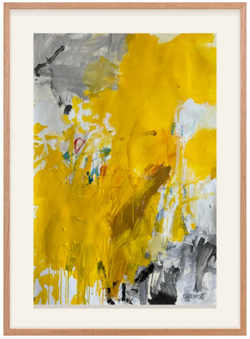 Ochre Hut I, 2025 oil on paper 115 x 70 cm, 125 x 90 cm (framed) |
 Ochre Hut II, 2025 oil on paper 115 x 70 cm, 125 x 90 cm (framed) |  Lost Love Song, 2025. Installation view, Arthouse Gallery, Sydney |
 Lost Love Song, 2025. Installation view, Arthouse Gallery, Sydney |  Lost Love Song, 2025. Installation view, Arthouse Gallery, Sydney |
 Lost Love Song, 2025. Installation view, Arthouse Gallery, Sydney |
Lost Love Song
Arthouse Gallery
16 October - 8 November 2024
Surfaces in Jo Davenport’s paintings are never static, they are always dynamic and in a state of flux with no two moments ever the same. Each painting represents a slice of time and of experience – unique and ephemeral but, at the same time, tapping into something that is ancient, permanent and eternal.
Davenport is an artist who subscribes to the idea of a painting being an arena in which the artist performs with splashes of thinned oil paint and gestural marks that reflect the scale of her body. The dynamism of her act of painting with the rhythmic swirls of vibrant colour and the frenzy of mark making create mesmerising trails on her canvases that are frequently of monumental proportions. While the performance is temporal, it captures a passage in time. It reflects a moment when the artist feels herself dissolving into the landscape that surrounds her and when she feels a oneness with that environment.
Davenport is not a tourist in the landscape who has temporarily ventured out into something exotic and aesthetically challenging to make a record of her fleeting sense impressions. She belongs to her environment and comes from a farming family who has generational links with this land in the Albury region and within herself she carries an inscribed generational memory of this habitat. If some traditional aspects of Jungian thinking suggest an archetypal sense of place with an innate psychological connection between people and environments, more recent developments in epigenetics suggest that there can be an intergenerational experience of place that creates what could be termed as ‘biological memories.’ This may lead to an intimate bond between the individual and a specific environment.
One could argue that Davenport, over a lifetime, has developed a sense of intimacy with her environment and as a local feels it in her bones, she dissolves into its moods and shares its spirit. There is a difference between feeling a sense of the sublime with a sensation of awe bordering on trepidation when encountering an overpowering scene, something that is sometimes compared with bearing witness to the divine, and the feeling of oneness with the surrounding nature and experiencing its ‘divinity from within’. For me, one of the most precious features of Davenport’s dissolving images of nature is precisely this sensation of sharing this sense of divinity. It is not something outside the artist, who fears and reveres it, but this artist belongs to the land that she depicts and celebrates its divinity while fearing for its threatened existence.
The title of Davenport’s latest solo exhibition, Lost love song, is an esoteric reference to the threatened Regent Honeyeater and the apparent possible loss of its mating call. The paintings included in this show, especially the glorious triptych Here, and the major paintings The West wind, Pink sky morning, Starry night and Blue rag track, celebrate a vibrancy, intensity of feeling and an overwhelming sense of joy and love. The artist loves, celebrates and reveres the landscape that surrounds her and of which she feels part. After professionally painting for many decades and holding more than twenty solo exhibitions, Davenport presents a full-throated, bold and colourful declaration of love for her environment and its multifaceted richness and diversity.
- Sasha Grishin
Emeritus Professor, Australian National University